 checkmyvibecode.com
checkmyvibecode.com
checkmyvibecode.com
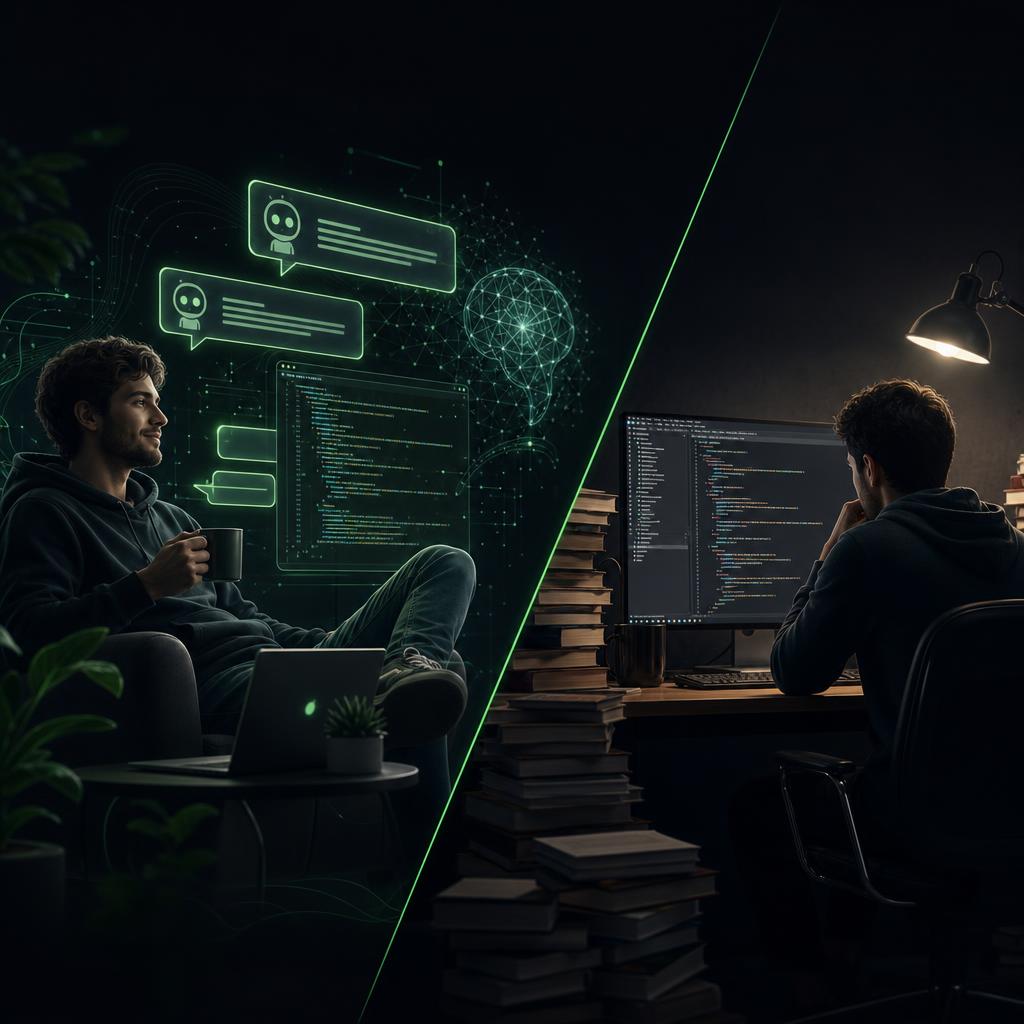
The debate is everywhere right now.
On one side: developers who spent years mastering their craft, arguing that AI-generated code is unreliable, insecure, and a shortcut that creates more problems than it solves.
On the other side: vibe coders shipping full products in weekends, building businesses without a single line of manually written code, and generating real revenue with tools that didn't exist three years ago.
So who's right?
The honest answer is: both. And neither. It depends entirely on what you're building, why you're building it, and what you value most.
Here's the real breakdown.
Vibe coding is building software by describing what you want in natural language and letting AI tools generate the code. Instead of writing functions, debugging syntax errors, and managing dependencies manually – you prompt, review, iterate.
Tools like Cursor, OpenAI Codex, Claude, Replit, and v0 have made this approach viable for anyone with a clear idea and the willingness to learn how to direct AI effectively.
The term was coined by Andrej Karpathy in 2025 and the movement has exploded since then. Millions of people who never called themselves developers are now shipping real software.
Traditional development means writing code manually – understanding the logic, the architecture, the syntax, the frameworks. It means debugging with real knowledge of what's happening under the hood. It means years of learning before you can build anything substantial.
This is still how most professional software gets built. Enterprise systems, safety-critical applications, complex infrastructure – these are built by experienced developers who understand every layer of what they're creating.
There is no comparison here.
A vibe coder with a clear idea can go from zero to deployed product in 48 hours. A traditional developer building the same thing from scratch might take weeks or months.
For MVPs, prototypes, and early-stage products, vibe coding is dramatically faster. The ability to iterate in real time – describe a change, see it implemented, test it immediately – compresses the build cycle in ways that traditional development simply cannot match.
Winner: Vibe Coding
AI-generated code can be messy. It can contain inefficiencies, redundant logic, and architectural decisions that an experienced developer would never make.
More importantly, AI-generated code can contain security vulnerabilities that a non-technical builder might not catch. SQL injection risks, exposed API keys, improper authentication – these are real risks when the person building doesn't understand the code they're shipping.
Traditional developers bring years of pattern recognition to quality. They know what good architecture looks like. They write code that's maintainable, scalable, and secure by default.
Winner: Traditional Development
Hiring a senior developer costs anywhere from €60,000 to €150,000+ per year in Europe. A vibe coder with the right AI tools spends a few hundred euros per month on subscriptions.
For early-stage founders, solo builders, and small businesses testing an idea, this cost difference is the difference between building and not building at all.
Winner: Vibe Coding
Products built with vibe coding often hit a ceiling. When your user base grows, when your data gets complex, when you need real performance optimization – AI-generated code frequently needs to be refactored or rebuilt by someone who actually understands the architecture.
Traditional developers build systems designed to scale from the start. They think about database indexing, caching strategies, and load balancing before they become problems.
That said – this gap is closing fast. AI tools are getting better at generating scalable architecture. And many vibe-coded products never need to scale past the point where the AI-generated code breaks down.
Winner: Traditional Development (for complex, high-scale systems)
Traditional development requires years of dedicated learning before you can ship anything meaningful. Computer science fundamentals, programming languages, frameworks, DevOps – the path from zero to shipping is long and steep.
Vibe coding has a learning curve too – but it's measured in days and weeks, not years. The skill you need is clarity of thought: being able to describe what you want precisely, iterate on feedback, and understand when something isn't working.
Winner: Vibe Coding
Vibe coding is the right choice when:
Traditional development is the right choice when:
The lines are blurring fast.
Traditional developers are increasingly using AI tools to accelerate their work. Vibe coders are learning enough fundamentals to build more complex products. The best builders in 2026 are somewhere in the middle – people who can direct AI effectively AND understand enough about what's being generated to catch problems before they ship.
The question is no longer vibe coding OR traditional development. It's how much of each, for what kind of product, at what stage.
If you're building with AI tools and want a community that actually understands what you're creating – CheckMyVibeCode is where vibe-coded projects live.
Submit your project, get real feedback from other builders, and get discovered by people who want to use, buy, or build on what you've made.
The best tool is the one that ships. Whatever gets your idea into the world fastest, with enough quality to solve a real problem – that's the right choice.